




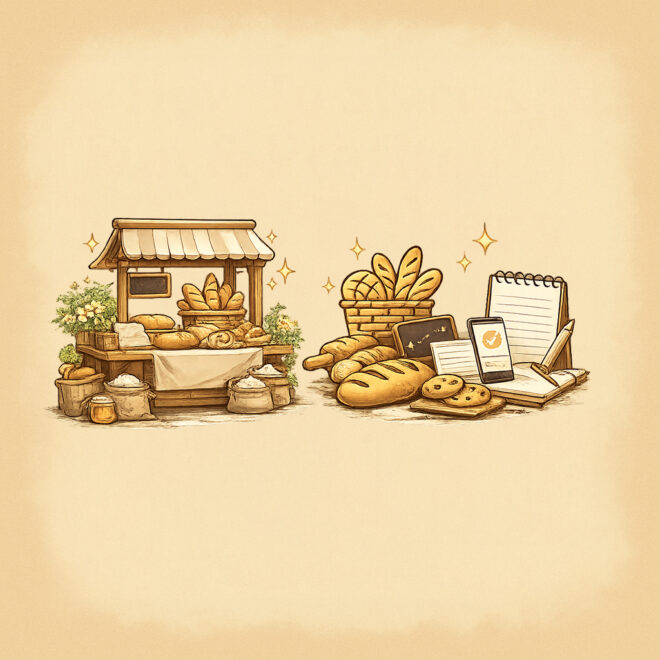
If you’re serious about starting a micro bakery, the very first decision you’ll need to make isn’t what to bake.
It’s how you’re going to sell baked goods from home.
This step matters more than most people realize, because your selling setup determines everything that comes after it…your schedule, your menu size, how often you bake, how much stress you carry, and how sustainable your home bakery actually feels.
Not long ago, owning a bakery meant one thing: opening a storefront.
That path usually required signing a long-term lease, investing in expensive commercial equipment, hiring employees, and taking on major financial risk before making a single sale. For most home bakers, that model simply isn’t realistic (especially if you’re starting with limited time, money, or business experience).
Thankfully, things have changed.
Thanks to cottage food laws, many home bakers can now legally sell baked goods from their home kitchen using the tools they already own – without a storefront, without employees, and without a massive upfront investment. And no, you don’t need business experience to get started.
At its core, selling baked goods from home is refreshingly simple. You’re baking bread, cookies, or pastries and selling them to people who already love homemade food. You’re not launching a tech startup. You’re not pitching investors. You’re creating something familiar, comforting, and genuinely wanted.
That simplicity is exactly what makes a micro bakery one of the easiest businesses to start and one of the most flexible.
Why Selling Baked Goods From Home Is Easier Than Ever
For generations, selling baked goods meant jumping through layers of red tape. Commercial kitchens, health department approvals, strict zoning rules, and high overhead made baking feel inaccessible unless you were willing to go “all in” from day one.
Cottage food laws changed that.
While details vary by state, these laws generally allow home bakers to sell certain baked goods made in their personal kitchens, as long as they follow basic guidelines. This legal shift has made it possible to start a home bakery slowly, safely, and intentionally.
Instead of betting everything upfront, you can:
- Start small and test demand
- Sell to real customers before scaling
- Build confidence and skill over time
- Keep your business intentionally simple
This is why so many successful micro bakeries don’t feel chaotic or overwhelming. They aren’t built overnight. They grow gradually, rooted in local communities and real routines.
And it all begins with choosing the right way to sell baked goods from home.
Before we talk about menus, pricing, or marketing, you need a selling setup that actually fits your life.
The 3 Most Common Ways to Sell Baked Goods From Home
There’s no one-size-fits-all approach to selling baked goods from home. The best setup depends on where you live, how much time you have, and how visible you want your bakery to be.
That said, nearly every successful home bakery starts with one of these three selling setups.
Let’s break them down. Honestly, practically, and without fluff.
Option 1: Selling Baked Goods From Home With a Bread Stand
A home bread stand is a small, welcoming setup placed outside your home where customers can stop by and purchase fresh baked goods.
Think of it as a tiny, hyper-local farmer’s market, right in your front yard.
Bread stands work because they remove friction. There’s no delivery coordination, no back-and-forth scheduling, and no complicated logistics. Customers simply show up during your posted hours, choose what they want, and leave happy.
This is exactly how I started my own micro bakery. I set up a simple stand outside my mother-in-law’s house in Illinois, added a few flower pots for warmth, laid out my bread and cookies, and opened for a few hours on one consistent day each week.

It wasn’t fancy. But it worked.
A bread stand creates something powerful: visibility. Neighbors notice. Cars slow down. People tell friends. It feels personal, approachable, and rooted in the community.
Why a Bread Stand Works So Well for Home Bakers
A home bread stand is often one of the fastest ways to build local awareness, especially if you live in a residential area.
Key benefits of a bread stand setup:
- Customers come to you (no delivery time)
- Minimal ongoing costs
- Strong word-of-mouth marketing
- Clear boundaries around selling hours
- A cozy, neighborhood feel people love
Bread stands work best when:
- You live in a neighborhood with foot traffic
- You enjoy light, casual interaction with customers
- You want to sell in short, focused time windows
That said, a bread stand isn’t ideal for everyone. Weather, zoning rules, or apartment living can make this option impractical. This is why many home bakers choose a different setup.
Option 2: Selling Baked Goods From Home With Pick-Up or Delivery
If you want flexibility (or if you live in an apartment, condo, or more urban area) home bakery pick-up or delivery is often the most realistic and scalable option.
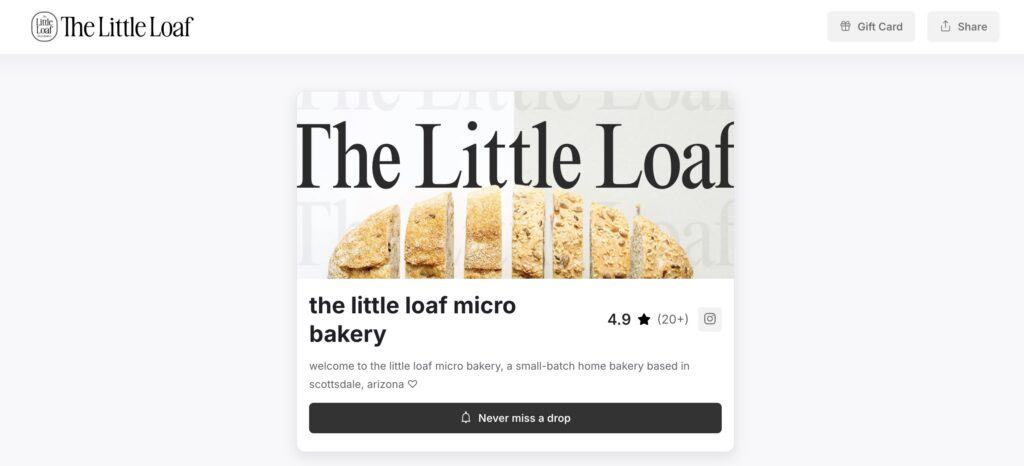
This is the setup I use today from an apartment in Arizona for my micro bakery The Little Loaf.
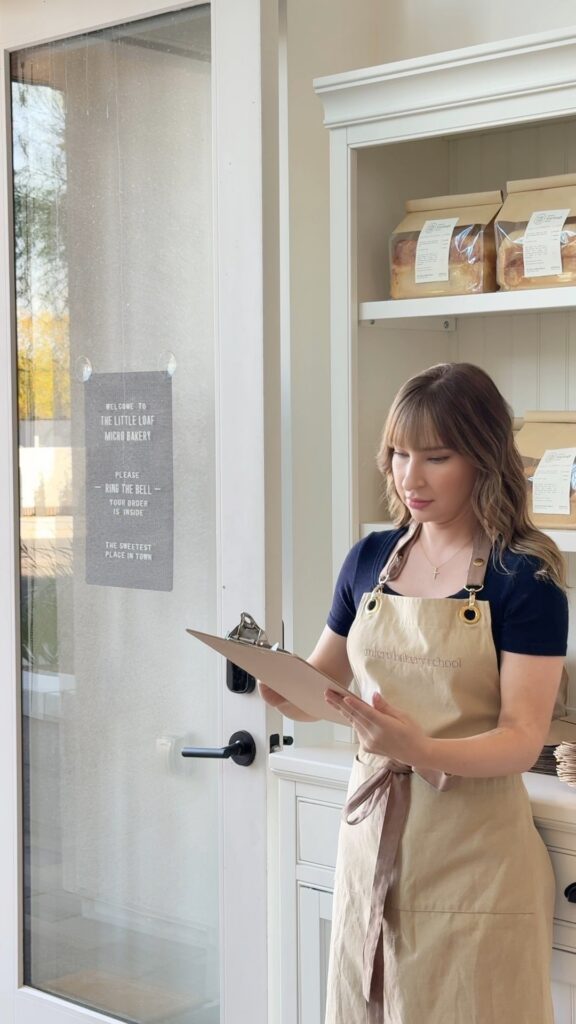
Instead of selling to walk-up customers, this model is built around planned orders. Customers place orders ahead of time, you bake intentionally, and orders are picked up or delivered on a set day. Note: I always recommend my students do pickup.
This approach removes guesswork and allows you to design your bakery around your actual schedule…not the other way around.
How Pick-Up or Delivery Usually Works
While details vary, most home bakers using this setup follow a rhythm like this:
- Customers place orders ahead using a simple online form
- Orders close on a specific day
- Baking happens in batches on set days
- Customers pick up their orders (or in some cases receive delivery)
This model gives you control over:
- How many orders you accept
- When you bake
- How often you sell
Why Pick-Up or Delivery Is So Popular
Pick-up or delivery is one of the most common ways people sell baked goods from home because it’s adaptable and low-pressure.
Key benefits include:
- Ideal for apartments or shared housing
- Very low overhead
- Predictable weekly rhythm
- Easy to adjust as life changes
For many home bakers, this setup makes the business feel calm instead of chaotic. It fits around jobs, families, and real-world responsibilities – which is exactly why it’s so sustainable.
Option 3: Selling Baked Goods From Home at Farmers Markets
For home bakers who enjoy face-to-face interaction and live near active markets, selling baked goods at farmers markets can be a powerful way to reach new customers quickly.
Farmers markets offer built-in foot traffic. People come ready to browse, sample, and buy. When your baked goods are displayed well and smell incredible, much of the selling happens naturally.
That said, farmers markets are very different from selling directly from home and it’s important to understand the tradeoffs before choosing this setup.
How Selling at Farmers Markets Works
Most farmers markets require:
- A vendor application
- A weekly or seasonal booth fee
- Set arrival and breakdown times
- Compliance with local cottage food regulations
On market days, you’ll typically:
- Bake ahead in larger quantities
- Transport your baked goods
- Set up a booth with signage and pricing
- Sell for several hours straight
For some home bakers, this is energizing and fun. For others, it can feel physically demanding and time-consuming.
Why Farmers Markets Can Be a Great Fit
Farmers markets work especially well if you:
- Enjoy talking with customers
- Want fast feedback on what sells
- Are building brand awareness
- Like the buzz of a live selling environment
Key benefits of selling at farmers markets:
- Built-in customer traffic
- Immediate sales and feedback
- Strong visibility for your bakery name
- Opportunity to test new products
However, markets usually require more prep, longer selling hours, and less flexibility than selling directly from home. That’s why many micro bakers start elsewhere and add markets later once their menu, workflow, and confidence are established.
How to Choose the Right Way to Sell Baked Goods From Home
After working with thousands of home bakers, I’ve learned something important:
There isn’t one “perfect” place to sell baked goods from home.
But there is a selling structure that consistently works best especially in the beginning.
This is what I teach my students inside Micro Bakery School.
The biggest mistake I see new home bakers make is choosing a setup based on what sounds impressive, instead of what actually fits their real life.
So before I ever let a student worry about menus, pricing, or marketing, I have them answer a few simple questions:
• How many days per week do you realistically want to bake?
• Do you want customers coming to you, or scheduled pick-ups?
• Do you prefer live, in-person selling or quieter, planned workflows?
• How much structure do you want around your time?
Your answers don’t determine whether you can start a micro bakery…they determine how sustainably you’ll run it.
That’s why I don’t teach a one-size-fits-all selling location.
I teach a flexible framework that can work with a bread stand, pick-up, or even farmers markets.
But there is one non-negotiable system I recommend for every beginner.
The Selling System I Teach Every Micro Baker to Use
Once my students choose where they’ll sell, I guide them toward a very specific approach:
Pre-orders.
When I first started, I assumed baking success meant baking constantly.
I thought I’d need to be in the kitchen every day, waking up early, guessing how much to make just like a traditional bakery.
That’s exactly what I teach my students not to do.
Most successful micro bakers don’t bake daily.
They bake a few days per week and sell everything on one set day using pre-orders to guide exactly what gets made.
This is intentional.
Pre-orders allow you to:
- Know what’s sold before you turn on the oven
- Buy ingredients with confidence
- Avoid leftovers and waste
- Create predictable income
- Protect your time and energy
Traditional bakeries bake first and hope customers show up.
Micro bakeries sell first and then bake.
Every loaf, cookie, or brownie is already paid for before it’s made.
This dramatically lowers risk and creates a calm, repeatable rhythm that fits into real life…even if you have a job, kids, or limited availability.
Your selling setup and your ordering system aren’t separate decisions.
They work together.
And when they’re aligned, your bakery feels simple, intentional, and sustainable (not exhausting).
What This Means for Your Home Bakery
Selling baked goods from home doesn’t require perfection, a storefront, or endless hours in the kitchen.
It starts with choosing a selling setup that fits your life, your space, and your energy, and not someone else’s version of success.
This is exactly how I teach my students to begin.
Once you know how you’re going to sell, everything else becomes easier:
- Your menu becomes clearer
- Your schedule becomes predictable
- Your bakery feels sustainable
So if reading this helped things click – that quiet moment where you thought,
“Okay… this actually feels doable,” I want you to pause for a second.
You’re not behind.
And you’re not overthinking this.
You’re just standing at the beginning.
That’s why I created a free Micro Bakery Masterclass to walk you through how this works in real life, step by step, without overwhelm or guesswork.
Inside the masterclass, I’ll guide you through:
✨ How to legally sell baked goods from your home
✨ The simplest selling setups for real schedules and real kitchens
✨ How micro bakers choose what to sell, how to price it, and how to sell out without baking nonstop
✨ And what it actually looks like to turn baking into income, one week at a time
No rushing.
No pressure to “go big.”
Just a calm, clear path so you can decide if this is something you want to build.
👉 Click here to save your spot in the free Micro Bakery Masterclass
I’d love to welcome you in and help you take that next gentle step toward creating something meaningful from your own kitchen.
With love,
Jess ♡
Micro Bakery Girl
Comments